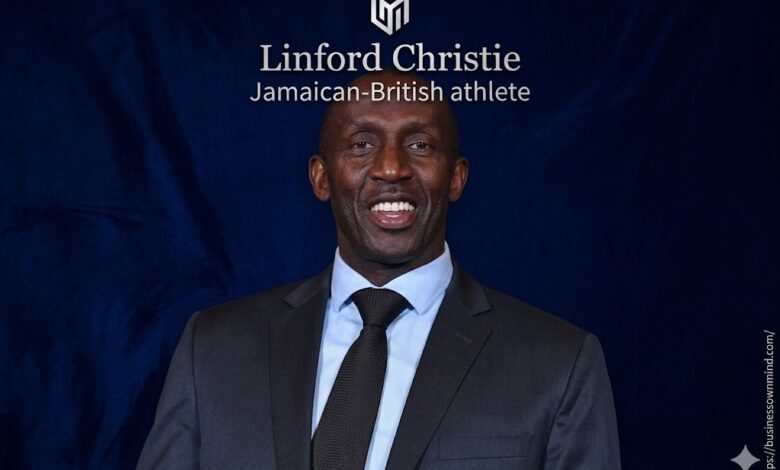
Linford Christie is a name that resonates deeply in the world of athletics. A Jamaican‑born British sprinter, Christie became one of the most decorated and iconic athletes of his generation, famous for his achievements on the 100-meter track. His career is a testament to hard work, perseverance, and the drive to compete at the highest level, defying the odds and breaking records along the way. With his swift, powerful strides, Christie became a pioneer of British sprinting, achieving feats that inspired a generation of athletes.
Early Life and Background
Born on April 2, 1960, in Saint Andrew, Jamaica, Linford Christie had humble beginnings. He was raised by his grandmother in Jamaica before moving to London, UK, at the age of seven to be with his parents. Despite his early struggles and adapting to life in a new country, Christie quickly grew into a young man with athletic potential. However, his path to greatness wasn’t as clear-cut as many would assume. Initially, he wasn’t seen as a natural-born sprinter; his interest in athletics developed later in his youth.
Linford Christie attended Henry Compton Secondary School in Fulham, where he participated in sports, but it wasn’t until his late teens that he began to take sprinting seriously. He was introduced to Ron Roddan, a coach who would later have a pivotal role in refining his technique and shaping his career. It was under Roddan’s guidance that Christie found his true calling in sprinting, setting the stage for what would become a legendary career.
Rise to International Recognition
Linford Christiebig break came in 1986 when he won the 100 meters at the European Championships. This victory put him on the map as one of Europe’s top sprinters. He had arrived at the forefront of athletics, and it was clear that he had the potential to dominate the sport. The following year, Christie secured silver in the 100 meters at the Commonwealth Games in Edinburgh, further solidifying his reputation as an up-and-coming athlete.
His performance at the 1987 World Championships was significant as well. Although he didn’t win a medal, finishing in fourth place in the 100 meters, Christie was later awarded bronze after Canadian sprinter Ben Johnson was disqualified for doping. Linford Christie consistent performances on the world stage helped elevate him to the top of British sprinting.
Olympic Glory: 1992 Barcelona
Linford Linford Christie defining moment came during the 1992 Summer Olympics in Barcelona, where he made history by winning gold in the 100 meters. His victory at 32 years old made him the oldest Olympic 100-meter champion in history. Christie’s time of 9.96 seconds secured him the gold medal, a performance that was seen as a testament to his skill, determination, and resilience.
Not only did Linford Christie victory in Barcelona make him a national hero, but it also cemented his place as one of the world’s greatest sprinters. His win was significant for British athletics, marking a new era of success in sprinting for the country, which had historically struggled to produce Olympic sprint champions.
Christie’s gold medal also made him only the third British man to win an Olympic 100-meter gold, following Harold Abrahams (1924) and Allan Wells (1980).
World Championships and Career Achievements
Following his Olympic success, Linford Christie continued to build his legacy on the world stage. At the 1993 World Championships in Stuttgart, Linford Christie achieved another monumental feat, winning the 100 meters gold medal and further proving that his Olympic triumph was no fluke. His time of 9.87 seconds was a British record, one that would stand for almost three decades. Christie became the first sprinter to hold the Olympic, World, European, and Commonwealth titles simultaneously — an extraordinary achievement that solidified his status as the undisputed 100m champion of his era.
Over the course of his career, Christie amassed an impressive total of 24 major championship medals, making him one of the most successful British male athletes in history. In addition to his success in the 100 meters, Christie also dominated in the 60 meters indoors, where he set several records and further expanded his influence in the sprinting world.
A Career Marked by Determination and Resilience
Linford Christie career wasn’t without its challenges. He faced fierce competition from some of the world’s best sprinters, including Carl Lewis, Ben Johnson, and Frankie Fredericks, but time and time again, Christie proved his ability to rise to the occasion and deliver when it mattered most.
Despite being considered an underdog at times, Christie’s work ethic and dedication to his sport allowed him to become a figurehead for British athletics. His relentless pursuit of excellence and his ability to maintain peak performance in his 30s was a rare achievement for a sprinter, an event usually dominated by athletes in their early 20s.
Retirement and Legacy
Christie retired from professional athletics in 1997, after a distinguished career that spanned over 17 years. But even after his retirement, his impact on the sport of athletics was far from over. Christie transitioned into a coaching role, working with up-and-coming sprinters and offering his expertise to the next generation of athletes. He has been credited with helping to develop and mentor future stars of British athletics, and his influence remains evident in the success of sprinters today.
He also made appearances on television as a commentator and sports personality, allowing him to remain closely tied to the public’s consciousness. Linford Christie charisma, knowledge, and passion for athletics made him a respected figure both on and off the track.
Honours and Recognition
Linford Christie’s legacy is widely recognised in the UK and beyond. He was awarded the Order of the British Empire (OBE) in 1992 for his services to athletics. Linford Christie also received numerous awards and accolades over the course of his career, including the BBC Sports Personality of the Year award in 1993. His induction into the English Athletics Hall of Fame further solidified his place as one of the sport’s greatest figures.
Christie’s legacy extends beyond his Olympic gold and world titles. He played a pivotal role in inspiring a new generation of British sprinters, showing them that it was possible to excel on the world stage. His career also helped change the perception of British athletics, demonstrating that the UK could produce world-class sprinters capable of competing at the highest level.
Personal Life
Linford Christie’s personal life has remained relatively private, though he has often spoken of his family and the importance of maintaining a balance between his professional and personal life. Christie is a father of several children, and he has continued to be involved in the lives of young athletes, offering mentorship and guidance to those following in his footsteps.
Despite his fame, Christie has always preferred to keep his personal life out of the media, focusing instead on his work with athletes and his post-retirement projects.
Conclusion
Linford Christie is a true legend of British athletics. From his humble beginnings in Jamaica to his groundbreaking victories on the world stage, Christie’s career is a story of perseverance, resilience, and an unwavering commitment to excellence. His impact on British athletics is immeasurable, and his success in the 100 meters continues to serve as an inspiration to athletes around the world.
As a coach, mentor, and commentator, Linford Christie remains a vital figure in the world of athletics, contributing to the development of future stars and helping to maintain the legacy of British sprinting. His story is one of triumph against the odds, and his influence will continue to inspire the next generation of athletes for many years to come.