Mansoureh Khojasteh Bagherzadeh: A Quiet Legacy Behind Iran’s Supreme Leader

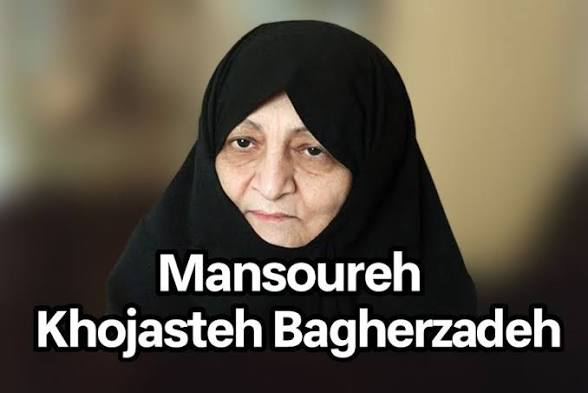
Mansoureh Khojasteh Bagherzadeh, a name seldom heard in the political sphere, holds a significant role in shaping the life of one of the most influential figures in modern Iran—Ayatollah Ali Khamenei, the Supreme Leader of Iran. Though she spent most of her life away from the public eye, her presence behind the scenes has been a cornerstone of Khamenei’s life and political career.
Early Life and Upbringing
Mansoureh Khojasteh Bagherzadeh was born in 1947 in Mashhad, a city renowned for its religious significance in Iran. The city, home to the shrine of Imam Reza, is a center of Shia Islam and its influence permeates the lives of many residents. Growing up in a deeply religious household, Mansoureh was taught the values of faith, modesty, and devotion from a young age. Her father, a well-regarded businessman in Mashhad, instilled in her a sense of respect for both Islamic values and the power of community.
The profound religious environment in which she was raised was to have a lasting impact on her personal and public life. She received an education that focused on traditional subjects, balancing her Islamic upbringing with the intellectual rigor of Iranian society during the 1960s. However, much of her personal life remained private, and her early education and youth are largely unknown to the broader public.
Meeting Ali Khamenei: A Fateful Union
In the early 1960s, Mansoureh’s path crossed with that of Ali Khamenei, then a young cleric in his early 30s who was making waves in the religious and political communities. Their marriage in 1965 was not just a union of two people but the beginning of a partnership that would play a vital role in shaping the course of modern Iranian history.
While Khamenei’s political journey was unfolding—his involvement in the Iranian Revolution against the Shah, his imprisonment, and his rise within the clerical ranks—Mansoureh stood firmly by his side. Their marriage was marked by mutual respect for each other’s dedication to faith and principles. Together, they navigated the tumultuous political landscape of pre-revolutionary Iran, which eventually led to the downfall of the Pahlavi monarchy and the establishment of the Islamic Republic in 1979.
Mansoureh’s support for her husband’s political career was often hidden from the public eye. While Khamenei took center stage, speaking out against the Shah and later assuming positions of political power, Mansoureh maintained a more modest role—choosing to stay out of the limelight. Her decision was not born from a lack of influence or capability but from a deep commitment to supporting her husband’s ambitions while nurturing their family away from public scrutiny.
A Mother and Pillar of Support
Throughout their marriage, Mansoureh and Khamenei raised six children. While little is known about their upbringing, it is clear that their home was one of discipline, faith, and intellectual engagement. Mansoureh’s role as a mother was not simply about managing household affairs but about shaping the next generation of leaders and thinkers. Her children were raised with the values of faith, community service, and patriotism, core principles that would later shape their own roles in Iranian society.
Despite her husband’s rising political power, Mansoureh never sought public recognition for her contributions as a mother and wife. She became known for her quiet strength, handling the internal dynamics of the household while Khamenei focused on his religious duties and political career. In interviews that she occasionally gave, she spoke about her satisfaction with her role in ensuring the stability and well-being of the family.
Her life as a mother was not free of challenges, particularly as Khamenei became deeply involved in the religious and political establishment of post-revolutionary Iran. Yet, through it all, Mansoureh remained steadfast—never publicly wavering in her support for her husband’s leadership.
Living in the Shadows of Power
Mansoureh’s presence in public life was, for the most part, invisible. Unlike the spouses of many other heads of state, she did not engage in public speaking, official functions, or represent her husband on the global stage. Instead, she took on a role that can only be described as the backbone of her family’s success. Her focus was on the home and the stability of her children’s upbringing, allowing Khamenei to pursue his political ambitions without the distractions of familial concerns.
This absence from public life has made her a figure of mystery. In a political landscape where wives of leaders often play pivotal roles—sometimes stepping into the public eye to support their husbands’ agendas—Mansoureh stood as a counterpoint. She was an example of the hidden strength behind powerful figures, quietly influencing the course of events without ever seeking credit.
Her Influence on Khamenei’s Leadership
Although she stayed away from the public spotlight, it would be impossible to underestimate the influence Mansoureh had on Ali Khamenei’s leadership. The stability and support she provided behind closed doors were critical in allowing Khamenei to rise to the highest levels of power in Iran. As the country’s Supreme Leader, Khamenei had to balance religious duties, political strategies, and familial obligations, and Mansoureh’s calm, unwavering presence helped him maintain his focus.
Her role was also one of spiritual support. As Khamenei became a significant religious figure, Mansoureh was a key part of his personal life, offering both emotional and intellectual support. While not directly involved in political decisions, her quiet influence in shaping Khamenei’s worldview cannot be ignored.
The 2026 War and Recent Developments
In March 2026, during the height of tensions in the Middle East, Ali Khamenei was tragically killed in an airstrike. The attack, which targeted several key figures in the Iranian leadership, shocked the world. For many, this was the end of an era in Iran’s political landscape. But the story did not end there. In the aftermath of Khamenei’s death, reports surfaced claiming that Mansoureh Khojasteh Bagherzadeh had been killed in the attack as well. Iranian state news outlets initially confirmed her death. However, just days later, Fars News Agency released a correction, claiming that Mansoureh had survived the attack, though her exact condition remained unclear.
Her survival, despite the chaos and devastation surrounding the attack, has left many wondering about the future of her family and Iran’s leadership. In the wake of Khamenei’s death, questions about the continuity of Iran’s political system and leadership have come to the forefront. Mansoureh’s life, though quiet and largely absent from the public eye, now stands as a symbol of resilience—showing that even in the most trying of times, those behind the scenes can leave an indelible mark on history.
A Quiet Legacy
Mansoureh Khojasteh Bagherzadeh’s life has been one of quiet service, dedication, and immense personal strength. While her name may not be as widely recognized as that of her husband, her role in shaping the leadership of one of the world’s most complex political systems cannot be denied. She represents the countless women who, often unnoticed, hold together the fabric of families and societies during times of tremendous change.
Her legacy, though still unfolding, reminds us that true strength often resides not in public recognition but in the quiet, steadfast devotion to family, faith, and country. Mansoureh Khojasteh Bagherzadeh may have spent much of her life in the shadows, but her influence remains deeply etched in the history of modern Iran.